
In the fast-paced world we live in, finding tranquility can feel like searching for a needle in a haystack. Enter pranayama—the ancient art of breath control that not only calms the mind but also revitalizes the body and spirit. Whether you’re a seasoned yogi or just stepping onto your mat for the first time, mastering these five essential pranayama techniques will elevate your practice and deepen your connection to yourself. Get ready to unlock new levels of relaxation, focus, and energy as we explore how each breath can be a step toward serenity. Let’s dive into the transformative power of pranayama!
Introduction to Pranayama
Pranayama, the art of breath control, is a powerful practice that can transform your yoga journey. It goes beyond mere breathing techniques; it’s about harnessing the life force within you to enhance physical health and mental clarity. Whether you’re a seasoned yogi or just starting out, mastering pranayama can deepen your connection to yourself and elevate your overall practice.
Imagine feeling more centered, calm, and focused in your daily life—all through the simple act of breathing. Not only does pranayama help improve lung capacity and efficiency but it also promotes relaxation by reducing stress levels. As we dive into the world of pranayama techniques, you’ll discover how these practices can enrich both your yoga sessions and everyday experiences.
Are you ready to explore five essential pranayama techniques that every yogi should learn? Let’s embark on this journey together!
More Details: Yoga Teacher Training in Rishikesh
Benefits of Pranayama for Yogis
Pranayama offers numerous benefits that can deepen your yoga practice. As yogis explore their breath, they unlock a pathway to greater self-awareness and mindfulness.
One of the most significant advantages is stress reduction. By focusing on rhythmic breathing patterns, you cultivate a sense of calm that permeates both body and mind.
Additionally, pranayama enhances lung capacity and respiratory function. This improvement not only supports physical endurance but also nourishes mental clarity.
Practicing these techniques encourages emotional balance too. It allows practitioners to release negative emotions and foster positivity.
The increased oxygen flow invigorates every cell in the body, promoting vitality and overall well-being. When incorporated into daily routines, pranayama becomes an essential tool for personal growth on and off the mat.
The 5 Essential Pranayama Techniques
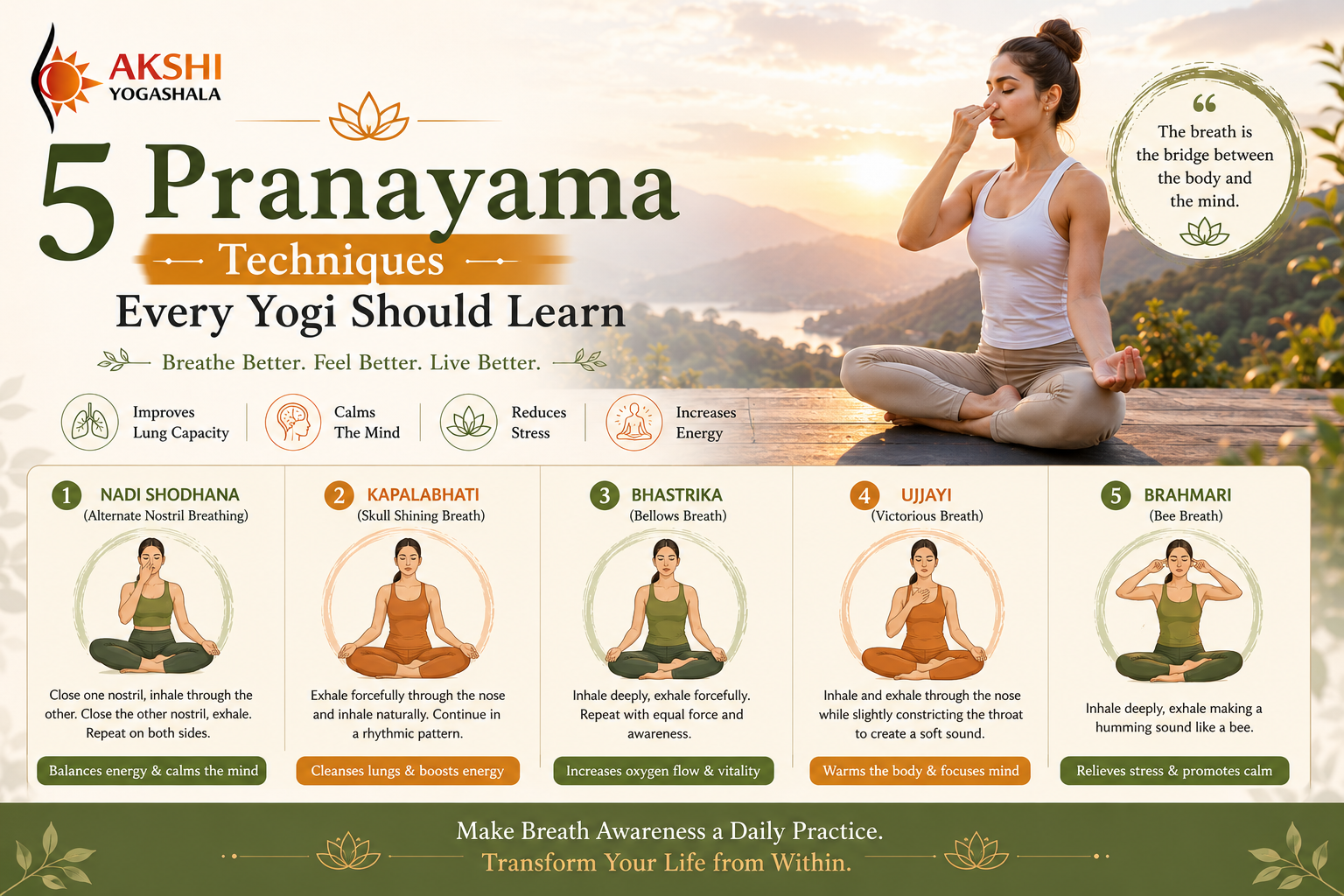
Nadi Shodhana, or Alternate Nostril Breathing, is a beautiful technique that balances energy in the body. By inhaling through one nostril and exhaling through the other, you create harmony between your left and right brain.
Bhastrika, known as Bellows Breath, invigorates your system with rapid inhalations and exhalations. This energizing practice helps to clear mental fog and elevate vitality.
Kapalabhati, often referred to as Skull Shining Breath, focuses on forceful exhales followed by passive inhales. It enhances clarity while cleansing the respiratory system.
Ujjayi breath offers a soothing rhythm; its gentle constriction at the back of the throat creates an ocean-like sound. This calming technique promotes mindfulness during yoga sessions.
Anulom Vilom combines alternate nostril breathing with breath retention for deeper relaxation. This method encourages focus and improves lung capacity while promoting emotional balance.
– Nadi Shodhana (Alternate Nostril Breathing)
Nadi Shodhana, often referred to as Alternate Nostril Breathing, is a powerful pranayama technique that balances energy in the body. This practice involves inhaling through one nostril and exhaling through the other.
Begin by sitting comfortably with your spine straight. Using your right thumb, close off your right nostril and inhale deeply through the left. Then, switch by closing your left nostril with your ring finger, releasing the right nostril to exhale fully.
This cycle promotes mental clarity and reduces stress levels. It harmonizes both hemispheres of the brain, fostering emotional stability.
Many yogis find this technique particularly useful before meditation or challenging practices. The rhythmic nature of Nadi Shodhana calms the mind while energizing the spirit. Engaging in this simple yet profound practice can transform how you approach not just yoga but also daily life challenges.
– Bhastrika (Bellows Breath)
Bhastrika, or Bellows Breath, is a powerful pranayama technique that invigorates the body and mind. This method mimics the forceful action of bellows used to stoke a fire. It creates an energizing effect that can uplift your entire yoga practice.
To begin, sit comfortably with a straight spine. Take deep breaths in and out through your nose while actively engaging your diaphragm. Inhale sharply and exhale forcefully; this rapid rhythm stimulates energy flow throughout your system.
The benefits are profound. Bhastrika increases oxygen supply to the brain, enhances mental clarity, and promotes emotional stability. It’s particularly effective for reducing fatigue after a long day.
For those new to pranayama, start slowly—perhaps five rounds—and gradually increase as you build stamina. The sound of your breath may feel like music as it resonates within you, igniting both passion and purpose on your yoga journey.
– Kapalabhati (Skull Shining Breath)
Kapalabhati, often referred to as Skull Shining Breath, is a dynamic pranayama technique that ignites energy and clarity. This practice involves short, forceful exhalations followed by passive inhalations. The rhythm stimulates the abdominal muscles and enhances lung capacity.
As you engage in Kapalabhati, focus on your core. Pull your navel towards your spine during each sharp exhale. Allow the inhale to happen naturally as you relax between breaths.
This breathing technique not only invigorates but also purifies the mind and body. It’s known to enhance concentration while promoting emotional balance. Many yogis incorporate this practice at the beginning of their sessions for an energizing start.
It’s essential to approach Kapalabhati with mindfulness. Start slowly, gradually increasing speed and intensity as comfort grows. With regular practice, you’ll likely feel a renewed sense of vitality flowing through you.
– Ujjayi (Victorious Breath)
Ujjayi, also known as Victorious Breath, is a powerful technique that cultivates focus and calmness. This distinctive breath involves slightly constricting the throat while inhaling and exhaling through the nose. The resulting sound resembles ocean waves, creating an internal rhythm that enhances concentration.
Practicing Ujjayi can deepen your yoga experience by synchronizing your breath with movement. It encourages mindfulness and helps maintain awareness throughout your practice. As you flow through postures, this controlled breathing provides stability and strength.
Additionally, Ujjayi generates heat within the body. This warmth facilitates muscle flexibility while promoting detoxification through sweat. Many yogis report feeling energized yet serene after engaging in this technique.
Incorporating Ujjayi into your routine can transform both physical practice and mental clarity. You may find yourself more present on the mat—and beyond—embracing each moment with intention.
– Anulom Vilom (Alternate Nostril Breathing with Retention)
Anulom Vilom, or Alternate Nostril Breathing with Retention, is a powerful technique in the Pranayama repertoire. It involves inhaling through one nostril and exhaling through the other, which helps balance energy within the body.
This practice not only calms the mind but also enhances concentration. By focusing on your breath, you create a meditative experience that fosters tranquility.
The addition of retention after each inhale adds another layer of benefits. Holding your breath can deepen relaxation and increase lung capacity over time. This controlled pause encourages mindfulness and patience.
As you practice Anulom Vilom, pay attention to how it feels physically and emotionally. Each cycle brings you closer to inner harmony while promoting clarity in thought.
Embrace this technique regularly for optimal results in both your yoga journey and daily life.
How to Practice Pranayama Safely and Effectively
Practicing pranayama requires mindfulness and awareness. Start by choosing a quiet space where you can focus without distractions.
Begin with a comfortable seated position, ensuring your spine is straight. This alignment supports optimal breath flow and energy movement.
It’s essential to approach each technique gradually. Start with just a few minutes daily, allowing your body to adjust before increasing the duration.
Pay attention to how your body feels during practice. If you experience dizziness or discomfort, pause and return to normal breathing.
Always listen to your intuition; adapt techniques as needed for comfort. You might find some methods resonate more than others.
Remember that consistency is key in developing proficiency over time. Embrace this journey of self-discovery through breath at a pace that suits you best.
Integrating Pranayama into Your Yoga Practice
Integrating pranayama into your yoga practice can elevate your sessions to new heights. Start by incorporating breath techniques at the beginning of your practice, setting a mindful tone.
As you move through poses, maintain awareness of your breath. Use specific pranayama techniques during transitions or challenging postures to help cultivate focus and calmness.
Consider pairing deep breathing with meditation after asanas. This adds depth to relaxation and enhances mental clarity.
You might also explore different formats, such as adding a dedicated pranayama segment within a class or workshop setting. Group practices often amplify energy and create community support.
Remember that consistency is key. Establishing a regular routine ensures that these powerful breathing techniques become second nature in both your yoga and daily life, fostering greater mindfulness throughout all activities.
Additional Tips and Resources for Deepening Your Pranayama Practice
To deepen your Pranayama practice, consistency is key. Set aside a specific time each day to focus on your breathing techniques. This will help you establish a routine and make progress.
Consider exploring online classes or instructional videos that offer guidance from experienced instructors. Learning from experts can provide insight into proper technique and alignment.
Journaling about your experiences with different Pranayama practices can also be beneficial. Reflecting on how each technique affects your mind and body enhances self-awareness.
Connecting with a local yoga community might open new avenues for learning. Engaging with fellow practitioners allows for shared insights and support in mastering these skills.
Lastly, reading books focused on breathwork can expand your understanding of Pranayama’s history, philosophy, and various methods. Knowledge enriches the experience, making every breath more intentional.
Conclusion: The Power of Breath in Your Yoga
The practice of Pranayama offers a profound gateway into the depths of yoga. By mastering these five essential techniques, you open yourself to a world of benefits that enhance not only your physical practice but also your mental clarity and emotional stability. Breathing is an anchor in our lives; it connects us to the present moment.
As you incorporate Pranayama into your daily routine, remember that consistency is key. Each breath serves as an opportunity for mindfulness and self-discovery. With time, you’ll notice the shifts within yourself—greater focus during asanas, improved relaxation during savasana, and enhanced overall well-being.
Mastering these 5 pranayama techniques can enhance your physical health, mental clarity, and emotional balance, making them essential practices for every yogi. Learn these powerful breathing techniques at a leading Yoga School in Rishikesh through a comprehensive 200 Hour Yoga Teacher Training in Rishikesh and deepen your understanding of authentic yoga.