
When people think of Miley Cyrus, they usually picture music, performance, and constant movement. But behind that lifestyle, there is also a consistent yoga practice — quiet, repetitive, and inward.
Over the years, she has shared moments of her Ashtanga yoga practice, not as a performance, but as part of her daily routine. What stands out is not the complexity of the poses, but the intention behind them: yoga as a way to stay mentally balanced.
Yoga Not for the Body, but for the Mind
Many people come to yoga through the body — flexibility, strength, appearance. But those who continue usually discover something else.
Miley once expressed a simple idea: yoga is something she does for her mind, not for her body. This reflects a deeper truth within traditional practice. The physical aspect may be the entry point, but the real work happens in attention, patience, and the ability to stay present.
In this sense, yoga becomes less about achieving poses and more about observing reactions — frustration, effort, control, and eventually, letting go.
What Is Ashtanga Yoga?
The style she practices, Ashtanga Yoga, is a structured and disciplined system. It follows a fixed sequence of postures, linked with breath and movement.
Each practice builds heat in the body, develops strength, and requires focus. But beyond the physical repetition, there is something meditative in the consistency. Doing the same sequence every day removes distraction and brings awareness to subtle changes — in the body, the breath, and the mind.
For many practitioners, this structure becomes a form of moving meditation.
Why This Practice Is So Transformative
A regular Ashtanga practice affects more than muscles and flexibility. Over time, practitioners often notice:
- a quieter, more stable mind
- improved concentration
- emotional balance
- increased discipline and consistency
- a deeper connection with breath
These changes are not immediate. They come through repetition — showing up on the mat again and again, even on days when motivation is low.
The Reality Behind Advanced Poses
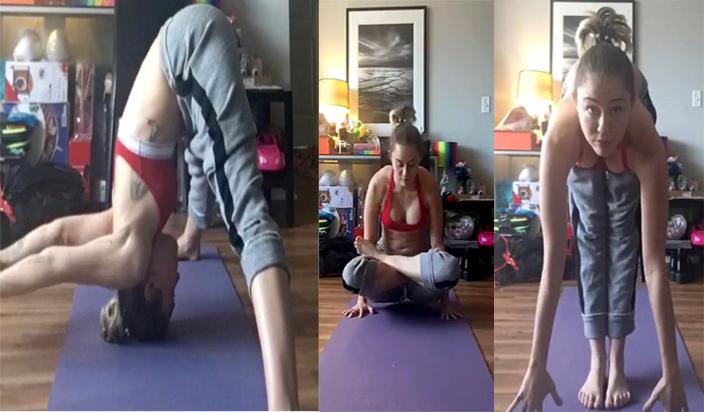
Images of advanced postures can be inspiring, but they can also be misleading. One of the poses Miley has shared is Kukkutasana (rooster pose), an arm balance that requires strength, openness in the hips, and control.
From the outside, it may look effortless. In reality, it is the result of long-term practice.
In traditional yoga, such poses are not the goal. They are by-products of consistent work. What matters more is the process — how you breathe, how you respond to difficulty, and whether you can remain steady in discomfort.
Yoga as a Daily Anchor
For people with busy or unpredictable lives, having a daily practice creates a point of stability. It doesn’t have to be long or complex. Even a simple sequence, done regularly, can shift how the day unfolds.
This is perhaps why so many practitioners — whether public figures or not — return to yoga again and again. Not for progress in poses, but for clarity.
Practicing in a Traditional Environment
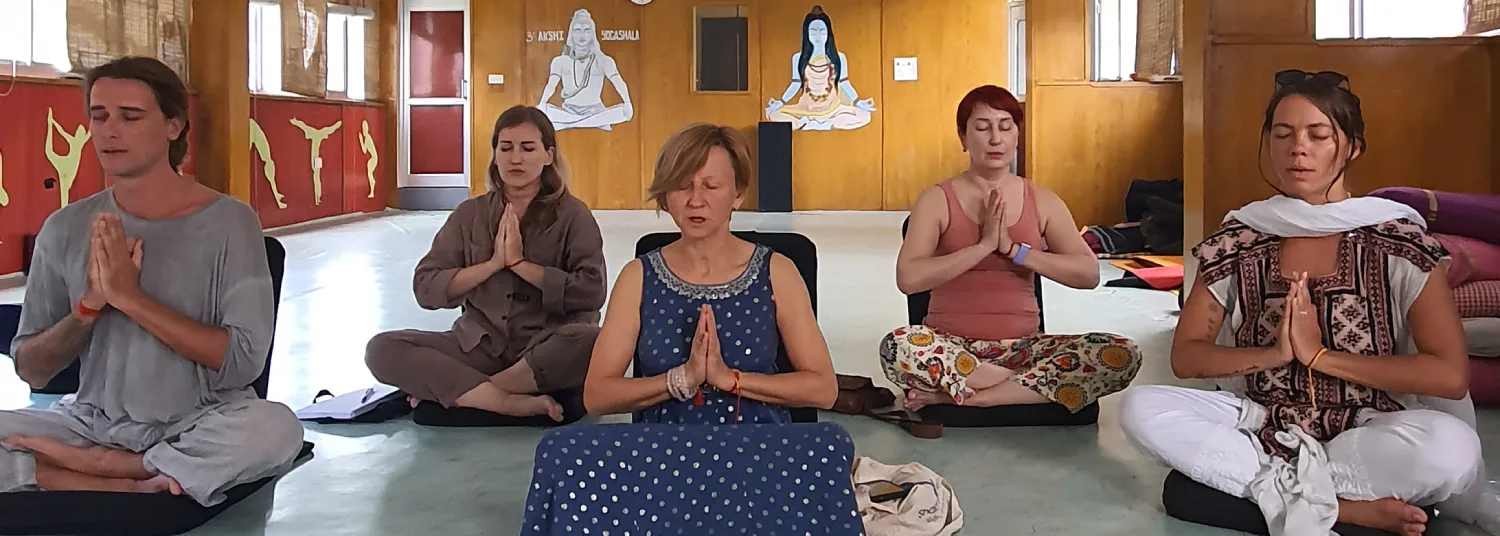
While yoga can be practiced anywhere, the environment can influence the depth of the experience. Practicing in Rishikesh, surrounded by nature and a long-standing tradition, often allows people to step out of their usual routines and go deeper into the practice.
At schools like Akshi Yogashala, the focus is not only on physical postures, but also on breathwork, meditation, and understanding the philosophy behind the practice. This broader approach helps students experience yoga as a complete system, rather than just a physical activity.
A Simple Takeaway
The most important part of yoga is not how advanced the practice looks, but how consistently it is done.
Whether someone is a beginner or an experienced practitioner, the principle remains the same: show up, breathe, observe, and continue.
Over time, the external form may change — strength improves, flexibility increases — but the deeper benefit is often a quieter and more steady mind.