
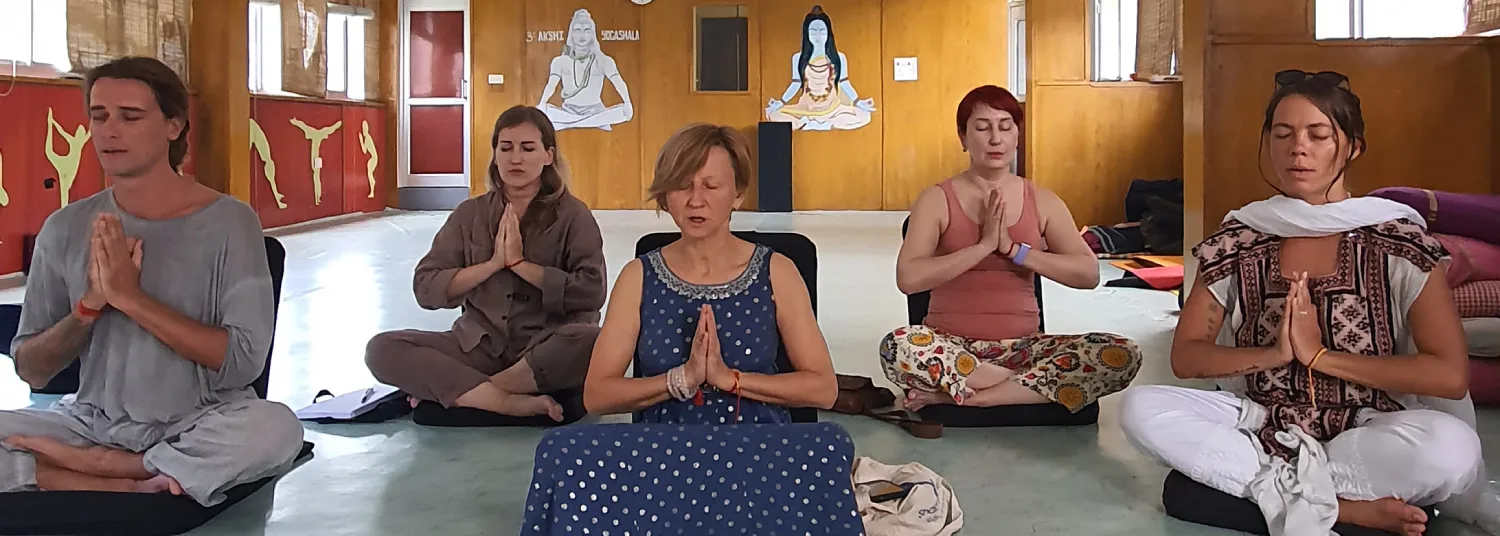

Most people who sign up for a teacher training are not planning to quit their job and teach full time. They have practiced for a few years, and at some point a regular class stops being enough. They want to understand what they are actually doing on the mat. Teaching often comes later, and for some people it never does.
This guide explains what a 200-hour yoga teacher training in Rishikesh really looks like: what you study, what it costs, how to get here, and how to tell whether you are ready. We run the course at Akshi Yogashala every month, so we use it as the example, but most of this applies to any school you are considering.
Is the 200-hour course the right first step?
The 200-hour TTC is the standard starting qualification. If the school is registered with Yoga Alliance, you can register as an RYT-200 after you finish and teach general classes anywhere that recognizes it.
It will not make you an expert, and a good school will tell you so. You leave with a foundation: how to teach asana and pranayama safely, how to build a class, how to cue and adjust, and enough anatomy and philosophy to know what you still need to learn. Most people say their first few classes feel awkward. That is normal.
Do you need an advanced practice? No. You should have practiced regularly for a while and be comfortable with the basic postures. You do not need a headstand, and you do not need to be flexible. If you can sit on the floor for a short while and you are curious, you can do the course.
Why Rishikesh
Rishikesh sits in the foothills of the Himalayas, with the Ganges running through it. Yoga has been taught here for a very long time, and there are ashrams, temples and teachers on almost every street. The International Yoga Festival takes place here every March.
It is also a busy town, not a silent retreat. There is traffic, noise and a lot of schools of very different quality. The real advantage is that for four weeks you are away from your normal routine, surrounded by people who are also there to practice, and that makes it much easier to focus.
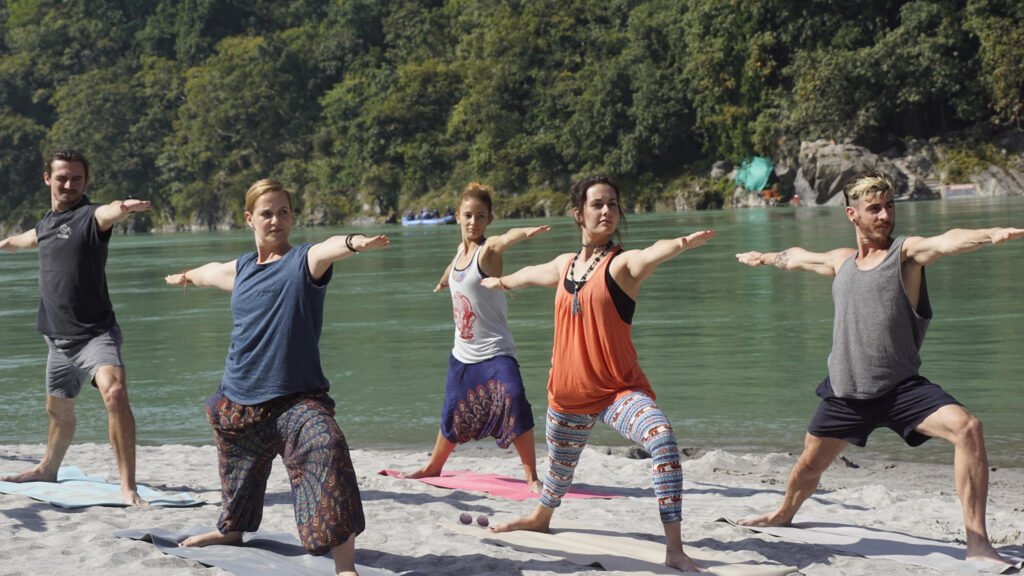
What you study
The subjects are the same in most good 200-hour courses. Ours are:
- Asana: Hatha, Vinyasa, Yin and Iyengar-based alignment
- Pranayama
- Meditation
- Mantra chanting
- Yoga philosophy and history
- Anatomy
- Asana adjustment and alignment
- Ayurveda
- Teaching methodology
Our main course is multi-style. If you prefer a slower, more traditional approach, we also run a separate 200-hour Hatha course. It has the same price, dates and inclusions. The only difference is that the evening vinyasa class is replaced by a Hatha class, so every class of the day is Hatha.
A typical day
05:00 AM Wake Up
05:30 AM – 06:00 AM Ginger/Herbal Tea
06:00 AM – 07:30 AM Hatha Yoga
07:45 AM – 08:45 AM Pranayama – Breathing Practices
09:00 AM – 10:00 AM Breakfast
10:30 AM – 11:30 AM Yoga Anatomy
11:45 AM – 12:45 PM Mantra/Adjustment & Alignment
01:00 PM – 02:00 PM Lunch
02:00 PM – 03:00 PM Rest
03:00 PM – 04:00 PM Yoga Philosophy / Ayurveda
04:15 PM – 05:45 PM Vinyasa Yoga
06:15 PM – 07:15 PM Meditation and Relaxation
07:30 PM – 08:30 PM Dinner
08:30 PM – 10:00 PM Self Study
10:00 PM Gates Closed, time to rest
The days are full, but not rushed. Most students say the second week is the hardest, when the body is tired and the theory gets dense, and that it gets easier after that.
Dates, prices and what is included
The 200-hour course runs every month, from the 3rd to the 28th.
- Triple shared room: 799 USD
- Double shared room: 999 USD
- Private room: 1,199 USD
The price includes all classes, accommodation, vegetarian and vegan meals, study material, laundry, free Wi-Fi, a T-shirt and excursions. Groups are limited to 20 people, and in practice we usually have 10 to 12, so you are not lost in a crowd and teachers know your name.
Course Fee Doesn’t Include
- Airport Pickup & Drop
- Personal Expenses
- Over Stay at the Ashram
- Flight Charges
Getting to Rishikesh
Most international travelers arrive in Delhi. From there, the road to Rishikesh is long, around five to seven hours depending on traffic, so many people take a domestic flight to Dehradun instead. Dehradun’s Jolly Grant airport is roughly an hour from Rishikesh. We offering transfer from Delhi and Dehradun to school and back, please email us your flight details to book pick up
Visa and insurance
Most visitors need a visa before they travel. Apply through the official Indian government e-visa website, not through third-party sites that charge extra, and do it well before your flight. Check the visa type and length of stay that suits a four-week course, and make sure your passport is valid for at least six months from your arrival date. Rules and fees change, so always confirm the current details on the official site. We recommend you to apply for E tourist visa and choose short term yoga course.
We also recommend travel insurance that covers medical care abroad.

When to come
February to April and September to November are the most comfortable months. Summers are very hot, and the monsoon in July and August brings heavy rain. Winter mornings and evenings are cold, so bring warm layers even if the days are pleasant.
How to choose a school
There are many good schools in Rishikesh and some that are not. A few things worth checking before you pay anyone:
- Is the school registered with Yoga Alliance? You can check this yourself on their website. Here is our Yoga Alliance profile.
- How big is the group? Smaller groups mean more attention on your practice and your teaching.
- Who teaches, and for how long have they taught? Ask for names.
- What do recent students say on independent sites such as Google, TripAdvisor and Yandex Maps, not only on the school’s own site?
- What exactly is in the price? Ask for it in writing, including accommodation, food and excursions.
Frequently asked questions
Can I join as a beginner? You should have some regular practice behind you. If you have only taken a handful of classes, start with a few months of practice at home first, then come.
Is 200 hours enough to teach? It is enough to start teaching group classes safely. Most teachers keep studying for years afterwards.
What is the food like? Simple vegetarian and vegan meals, three times a day. Let us know about any allergies before you arrive.
Can I travel alone? Many students do, and a good number of them are women travelling alone. Rishikesh is used to this, but use normal common sense, as you would anywhere.
What if I am injured or unwell during the course? Tell your teachers straight away. They can modify the practice, and you can rest when you need to.
How do I book? Please fill application form and follow email information further
Ready to join?
If you would like to talk before deciding, write to us and ask anything. You can see the dates, rooms and prices on our 200-hour Yoga Teacher Training in Rishikesh page.