
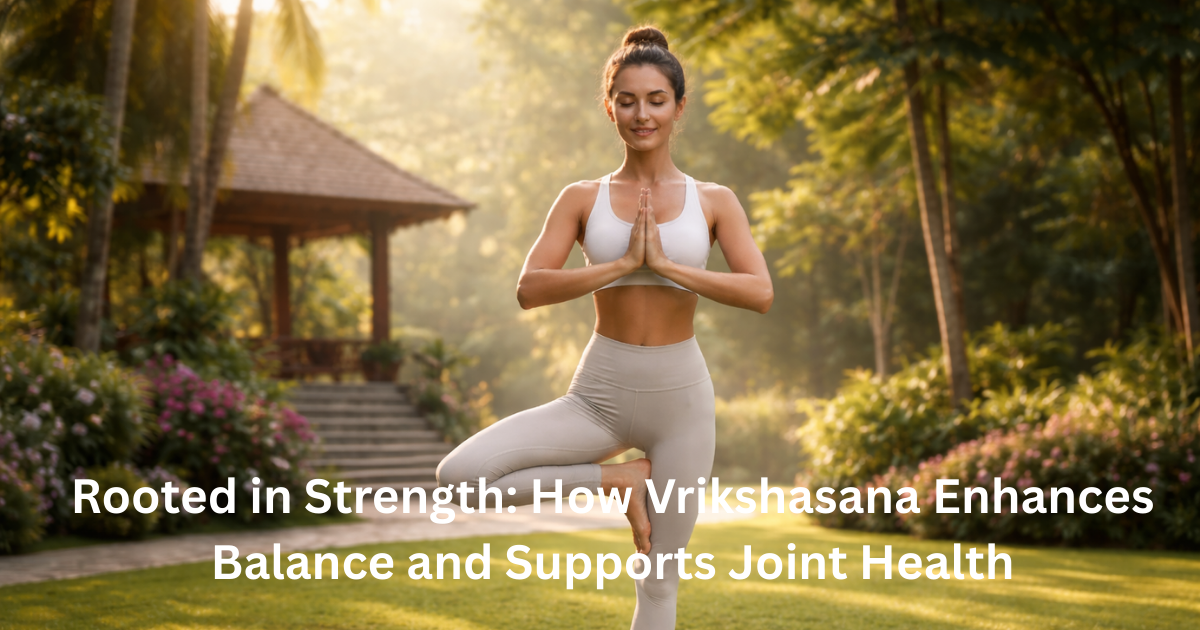
It has never become so important to see yourself in balance, both physically and mentally, in a world that seems to be growing spins out of control. Pose Vrikshasana or Tree Pose is a strong yet a convenient yoga position, which can not only bring you down but also make you feel good. Just think how well you would stand on your feet like a tree that is very old, with one foot on the ground and the other leg stretched gracefully up to the air. It is this blissful combination of power and stability that encourages you to wander new levels of equilibrium as well as supporting crucial joint life. You are an experienced yogi or even new to the world of wellness; regardless, you are welcome and we are going to explore the transformational powers of Vrikshasana- a position that grounds us and gives power to our bodies, starting at the feet!
Introduction to Vrikshasana (Tree Pose)
Ever seen a tree swinging in the breeze with its roots planted very solid, but supple? This photo is an ideal representation of what is meant by Vrikshasana or Tree Pose, a common yoga pose that promotes physical and mental stability. We have to balance ourselves as we go through the good and bad times in life. Vrikshasana is more than a support to remain centered, it will also aid in the health of the joints, which is why it is an invaluable addition to wellness. No matter how long you are a yogi or it is your first time on the mat, this pose is able to change your body and mind. We shall consider the benefits of Vrikshasana are to create a sense of balance and joint stability as well as keeping a solid base, just like a strong tree standing high above the difficulties of life.
History and Meaning of Vrikshasana
Vrikshasana also known as Tree Pose has a long history that can be traced back to the ancient Indian traditions. It has been named after the Sanskrit word vriksha, which translates to tree. This pose is a demonstration of power and steadiness because it represents a tree that does not move in the environment.
Vrikshasana is not merely a physical pose, and this has been historically associated with the yoga practices over 5,000 years. It symbolizes the unity between the mind and body and developing inner serenity via the sense of groundedness.
Most spiritual doctrines view trees as means of life and development. This pose practice challenges practitioners to adopt the adventure of self-improvement as well as develop resilience in the face of challenges.
The balancing on one leg is a mimic of the rooted position of a tree facing the winds of change. Whenever you get in this pose you trace back centuries of a wisdom that were bestowed on generations to come with the intention of sharing the transformative powers of that pose.
Benefits of Vrikshasana for Balance and Joint Health
Vrikshasana or Tree Pose is a potent friend in increasing the body balance and in improving the health of the joints. Standing on one leg with the other foot elevated on the inner thigh or the calf of the leg that is supporting gives the practitioners core muscles that are vital in maintaining stability.
Your body will learn to coordinate the movements as you take this pose. This enhanced balance in the day-to-day activities because of this enhanced proprioception.
Also, Vrikshasana enhances the stability of the major joints like ankles and knees through supporting the correct alignment and distribution of weight. These regions are stabilized in the long run with the help of lower body muscles.
In addition, Vrikshasana makes hips and legs flexible. Increased mobility allows increased range of movement that decreases stiffness. This soft movement is also able to relax the surrounding muscles and this leads to harmony in your physical body.
Must Visit: 200 Hour Yoga TTC in Rishikesh
– Improved balance and stability
Vrikshasana or Tree Pose also improves your balance greatly. When you raise yourself on one leg and place the other foot on your inner thigh, you are compelled to use your core and get your body straight.
This not only intensifies physical balance but it also intensifies the mental focus. When you are focusing on something in front of you, you become free of distractions. Such awareness helps create more balance on and off the mat.
The balancing function promotes further involvement of muscles in the entire legs and hips. With time, you will find that you have coordination and less wobbling in your daily activities.
Vrikshasana is the proprioception, or the perception of the body position, which makes it less difficult to move along the irregular lines or unexpected shifts in everyday life. Regular practice instills confidence and also the stable footing in many situations and postures.
– Strengthened joints and muscles
Vrikshasana or Tree Pose is of great help to your joints and muscles. The muscles that support you as you stand on one leg go deep into action. The activation will not only make the muscles surrounding your knees stronger, but you also have the muscles surrounding your hips and ankles being strengthened.
This pose is held in an isometric position and this puts your joints under a gentle pressure, but stabilizes them. This, with time, may result in a greater resistance to injuries and strains. The body gets to know how to distribute weight more evenly.
Moreover, as you train, you will see an increase in muscle tone all throughout your legs and your core. These enhanced stronger areas aid in the enhancement of fit in daily activities.
As you make progress in Vrikshasana, you will probably get better proprioception, or the sense of body position, which will result in more even movements in all life activities. It will be less difficult to balance since there will be more stability because of stronger joints.
– Increased flexibility and range of motion
Vrikshasana is not only good to increase your balance, but also considerably improves your flexibility. The mild stretching of your hips and thighs as you sink into the posture promotes a further intensity of movement.
This enhances movement in day to day activities. It could be when you need to bend up to tie some shoelaces or stand up to get something out of a tall shelf, having better mobility makes these things easier.
The body gets used to this and gets more agile with time. As you practice, you will find that the joints such as the knees and hips are not that stiff.
When you are on the Vrikshasana, deep breathing is one of the ways to relieve tension in the tight muscles. Such consciousness will establish a balance of power and flexibility in your body.
Enhancing this balance enhances not only physical performance, but also well-being, which preconditions increased fluidity in all the movements that you make during the day.
Step-by-Step Guide on How to Practice Vrikshasana
Start with standing in the tall position with your feet hip-width apart. Stand Square into the ground, feeling like you are in a stable position.
Sit on one leg, and use it as a keystone. Rest your other knee and foot on the thigh of calf of the standing leg. Do not lean it against the knee.
Hold hands in the heart position and pray. Stop and treat yourself to a breath and breathe in and out slowly.
As soon as you are steady, bring your arms up in the air with palms opened up facing one another or even facing up. Maintain consistent eye contact with something in front of you in order to improve concentration.
Keep this pose a few breaths with the relaxation of the whole body. When you are ready, then, be careful to repeat on the other side so that you practice both sides.
Also vIsit: 300 Hour Yoga Teacher Training in Rishikesh
Modifications and Variations for Different Levels
Vrikshasana could be adjusted to practitioners of each level. Novices can support themselves with the assistance of a wall or chair. This provides a sense of stability as you gain strength and confidence in the position.
Once the yogis are at intermediate stage, they can make it a challenge by shutting their eyes to increase concentration and awareness of their bodies. Or, instead, stretch by putting hands over your head and palms up.
The advanced practitioners could experiment with the difference of lifting one of the feet higher on the thigh or adding dynamic movements like bending over on the fold as they hold balance.
Yoga blocks are also props, which can help every person seeking to advance his or her practice without overstraining. The alterations will enable everyone to enjoy Vrikshasana privileges without overstepping personal boundaries and abilities.
Tips for Proper Alignment in Vrikshasana
Proper alignment is crucial when practicing Vrikshasana. Start by grounding your standing foot firmly into the mat. Spread your toes wide for added stability.
Engage your thigh muscles to support your knee and keep it aligned with your ankle. This connection helps maintain balance throughout the pose.
As you lift the opposite leg, place the foot on either your inner thigh or calf—avoid the knee area to prevent strain. Flexing and activating this leg enhances strength while ensuring safety.
Draw energy up through your spine as you lengthen it toward the sky. Keep shoulders relaxed and away from ears, opening up space in your chest.
Finally, find a fixed gaze point ahead of you; this drishti will help anchor concentration and enhance focus during practice.
Incorporating Vrikshasana into Your Daily Routine
Incorporating Vrikshasana into your daily routine can be both simple and rewarding. Start by integrating it into your morning ritual. A few minutes of practice can set a positive tone for the day ahead.
Consider practicing during breaks at work or while waiting for appointments. It’s an excellent way to center yourself, reduce stress, and enhance focus. Just find a quiet corner or even stand beside a wall for added support if needed.
Evening relaxation sessions benefit greatly from this pose too. As you wind down, Vrikshasana helps release tension accumulated throughout the day, promoting restful sleep.
You don’t need extensive timeframes; just a minute here and there adds up over time. Embrace these moments as opportunities to reconnect with your breath and body amidst life’s busyness. This mindful approach transforms everyday occurrences into chances to cultivate balance in both body and mind.
Other Yoga Poses that Complement Vrikshasana
Other yoga poses could also be incorporated to supplement the benefits of Vrikshasana. Both poses have an ability to assist in balance and be more supportive of joint stability.
A good place to start is the Tadasana, or Mountain Pose. It supports standing and improves the grounding and supports poses of standing.
Utthita Trikonasana or Extended Triangle Pose is a pose that expands the body sides. This is useful in enhancing the flexibility of hips and spine as well as ensuring stability overall.
When Vrikshasana is combined with Eka Pada Rajakapotasana (Pigeon Pose), this posh would provide a deep hip opener to the lower body strength of Vrikshasana. It sheds stress which can be an obstacle to balance.
Moreover, Adho Mukha Svanasana (Downward-Facing Dog) improves the upper body strength, and stretching of muscle groups that are highly needed to maintain stability in tree pose.
These additions will enhance your perception of balance into your practice.
Conclusion: Embracing Rooted Strength through Vrikshasana
The Vrikshasana practice is the path of building a better balance and healthy joints. This posture is an old time stand that not only puts you at ease physically but mentally as well thus, developing stability in your daily life. When you are doing the Tree Pose, imagine that you are a powerful tree and your roots are so deep that you can support yourself on the ground.
Vrikshasana has immense advantages. A better balance will increase your stability as well as strengthening joints and muscles will lead to the efficiency of movement. Greater elasticity will lead to increased freedom of movement, and this aspect can be particularly helpful in old age.
It does not need to be a huge undertaking to make this pose a regular part of your routine. Step by step instructions and changes that can be made at any level mean that anyone can get his way into this empowering position. The physical and mental benefits are multiplied when the practice is conducted regularly in addition to other complementary yoga poses.
As you stand tall in Vrikshasana, remember that each session is an opportunity to connect with your body more deeply. With patience and dedication, you’ll cultivate rooted strength that supports both balance and joint integrity—qualities that serve us well on our life’s path.